Column · @dailyjournalrecommendationslab
Daily Journal Recommendations for Writers Who Actually Write
For years I kept buying notebooks that looked good on the shelf but felt wrong on the desk. The paper was too slick, the binding too stiff, the pages too few. I would start a journal with good intentions, then abandon it three entries later because the experience of writing in it just didn't click. After testing dozens of brands through real writing projects, travel logs, and daily morning pages, I have settled into a set of daily journal recommendations that actually work for the way I write. These are not the prettiest or most expensive options. They are the ones that make me want to write every day.
I have been through Leuchtturm1917 notebooks with their numbered pages and table of contents. I have filled Moleskine cahiers on long train rides. I have tested Rhodia pads for fountain pen work and Field Notes pocket books for quick notes. Each has its place. But when someone asks me for daily journal recommendations, I try to understand how they actually write before I suggest anything. Do they use a fountain pen or a ballpoint? Do they write in bed or at a desk? Do they need portability or space? The answers change everything.
Let me walk through what I have learned, brand by brand, and why each one deserves consideration depending on your habits.
The Paper Matters More Than You Think
The first thing I look for in any journal is the paper. If the paper bleeds or ghosts too much, I will not use the notebook for long. Tomoe River Paper is the gold standard for me. It is incredibly thin, which means more pages in a slim volume, and it handles fountain pen ink with almost no bleed-through or feathering. Hobonichi Techo planners use Tomoe River Paper, and that is why so many writers swear by them. The Hobonichi Cousin gives you a full year of daily pages in a book that still fits in a bag. I have carried one through two winters and one summer, and the paper never let me down.
That said, Tomoe River Paper is not for everyone. It is so thin that you can see the writing on the other side. If that bothers you, look at Clairfontaine or Rhodia. Both use a slightly thicker, coated paper that feels smooth under the pen and shows ink colors beautifully. Clairfontaine notebooks are staple-bound and lie flat, which I love for writing at a coffee shop. Rhodia pads are perfect for quick drafts and to-do lists. I keep a Rhodia No. 16 on my desk at all times.

Hardbound vs. Soft Cover: A Matter of Surface
Hardbound journals like those from Leuchtturm1917 or Paperblanks look elegant and protect your writing well. But they can be awkward to write in if you like to fold the book open. Leuchtturm1917 notebooks lay reasonably flat once you break them in, but some people find the spine too stiff. I have had a Leuchtturm1917 on my shelf for two years that I still have not started because I keep reaching for something more flexible.
Soft cover notebooks, like the Traveler's Notebook system, are far more forgiving. The Traveler's Notebook lets you swap inserts, so you can carry a calendar, a daily journal, and a sketchbook all in one leather cover. I have used the standard size for travel and the passport size for pocket notes. The flexibility is addictive. You can buy refills from many makers, including blank, grid, lined, and even watercolor paper. I have paired mine with inserts from Nanami Paper and Muji, which are affordable and well made.
If you prefer a soft cover that is not a system, the Dingbats notebook is a strong option. It is vegan leather, lays flat, and uses a heavy 100gsm paper that handles most pens without issue. I have a Dingbats dotted notebook that I use for morning pages and it has held up well through a full year of daily use.
Size and Portability
For daily journal recommendations, size is one of the most personal decisions. I have tried A5, B5, pocket, and even A4. A5 is my sweet spot. It fits in most bags, gives enough room for a solid page of writing, and does not feel cramped. The Hobonichi Techo A5 Cousin is my current daily driver. But when I am traveling light, I switch to a Field Notes memo book or a Muji pocket notebook. Those are small enough to slip into a jacket pocket and cheap enough that I do not worry about using them up.
Field Notes makes a wide range of themed editions, but the standard graph or lined notebooks are what I use. The paper is not fountain pen friendly, but for a ballpoint or a Pilot G2, it works fine. Muji notebooks are even more minimalist and cost about a third of the price. I buy them in packs of five and use them for brainstorming, grocery lists, and rough drafts. They are not fancy, but they get used.
Specialty Journals for Specific Needs
Sometimes a generic notebook is not enough. If you are a bullet journal person, the Archer & Olive notebooks are a popular choice. They have thick 120gsm paper that can handle watercolor and heavy ink without bleeding. The pages are numbered and the binding is sewn, which means they open flat and last. I have not personally stuck with bullet journaling, but I have tested an Archer & Olive for a month and it is a well-made product.
For those who prefer a structured journal, the Peter Pauper Press and Exacompta lines offer gilded edges, ribbon bookmarks, and high-quality paper at reasonable prices. Peter Pauper Press journals have a classic look that feels special without being pretentious. Exacompta is a French brand known for its Clairefontaine paper and simple, sturdy construction. I keep an Exacompta notebook for meeting notes at my desk.
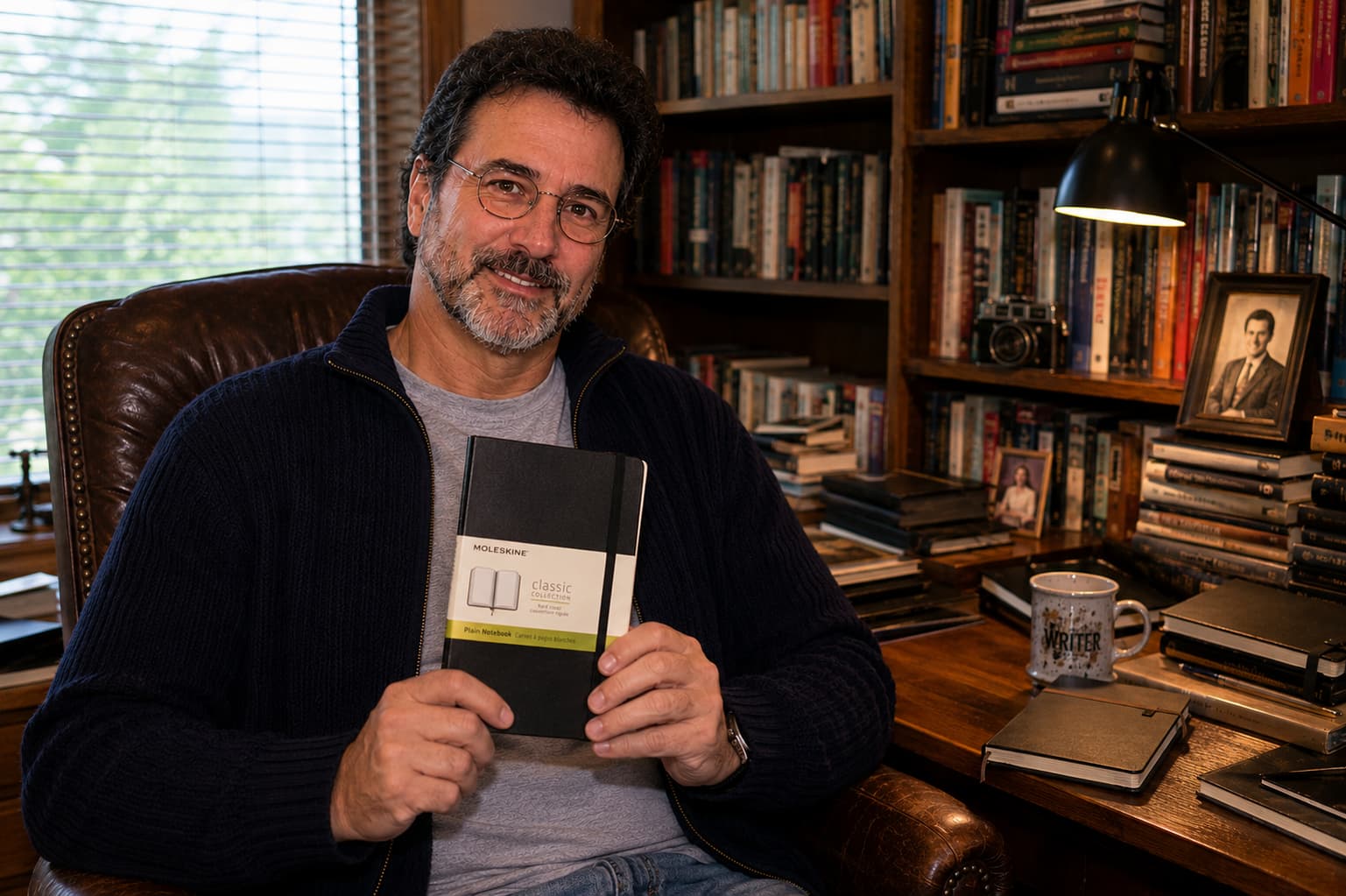
If you want something that combines digital and analog, Rocketbook makes a reusable notebook that you scan with your phone. The pages wipe clean with a damp cloth. I was skeptical at first, but after using one for a few months, I see the value for people who need to digitize their notes regularly. The paper is not as pleasant as Tomoe River or Clairfontaine, but the convenience is real.
For fountain pen enthusiasts, Nanami Paper sells notebooks made entirely of Tomoe River Paper. They are slim, soft cover, and come in A5 and A6 sizes. I have used the A6 for a pocket journal and the A5 for longer writing. The paper shows shading and sheen beautifully. It is a niche product, but if you care about how your ink looks on the page, it is worth trying.
Baron Fig notebooks have a loyal following. They are well designed, with a lay-flat binding and a dot grid that works for both writing and drawing. I used a Baron Fig Mastermind for a project notebook and found it pleasant, though the paper is not as fountain pen friendly as I would like. Still, for a ballpoint or a rollerball like the Pilot G2, it is a solid choice.
I have also tested Carson Dellosa composition books, which are inexpensive and widely available. They are not going to win any design awards, but they work. If you are just starting out and do not want to spend much, a Carson Dellosa composition book and a Pilot G2 pen are a perfectly functional combination. You do not need a premium journal to write well.
Lamy Safari pens are a common companion to many of these notebooks. I use a Lamy Safari with a fine nib for most of my journaling. It pairs well with Tomoe River Paper and Clairfontaine. The ink flows smoothly and the pen is durable enough to throw in a bag. If you are looking for a reliable everyday pen to go with your journal, the Lamy Safari is a good start.
How to Choose Your First Journal
If you are new to journaling, my advice is simple. Do not overthink it. Pick one of the daily journal recommendations I have mentioned, buy a single notebook, and start writing. The best journal is the one you actually use. Everything else is secondary.
I recommend starting with a Muji A5 lined notebook or a Rhodia staplebound pad. Both are affordable, easy to find, and pleasant to write in. Use a pen you already like, even if it is a ballpoint. Write for five minutes every morning. Do not worry about what you write. Just fill the page. After a month, you will know what you want in your next journal. Maybe you want more pages, or thicker paper, or a different size. That is the time to explore Leuchtturm1917 or Hobonichi or Archer & Olive.
One thing I have learned is that the ritual matters more than the tool. The act of sitting down, opening your notebook, and putting pen to paper is what builds the habit. A Leuchtturm1917 will not make you a writer. But a notebook that feels right in your hands can make the habit easier to sustain.
I have gone through periods where I used nothing but a Field Notes pocket book and a Pilot G2. I have also spent months with a Hobonichi Techo and a Lamy Safari. Both approaches worked because I was consistent. The notebook was just the container. The writing was the point.
So if you are looking for daily journal recommendations, start with something simple, use it every day, and let your own experience guide your next purchase. That is how you build a practice that lasts.